Colposcopy: key to early detection of precancerous lesions and cervical cancer
Authors:
Juliana Muñoz Restrepo, obstetrician-gynecologist UdeA-UNAL. @juli_gine
Laura Joanna Tapia Vela, Medical Pathologist
Hematológico S.A. Medellín, Colombia.
Date of publication: 24/11/2023
Date updated: 08/08/2024
Cervical cancer is a major health concern, as it is the fourth most common cancer affecting women in the world and the most common in Colombia. (Source: Sispro). Fortunately, there are methods that, although they may be uncomfortable for many women, are fundamental for early detection and prevention. One of the key procedures in this struggle is the colposcopy.
Learn more: https://lch.co/la-citologia-cervicouterina-en-base-liquida/
Early detection
Early detection of precursor or premalignant lesions is essential for the prevention and early treatment of cervical cancer. The site that is evaluated for this purpose is the cervix, located in the lower portion of the uterus or womb, at the bottom of the vagina.
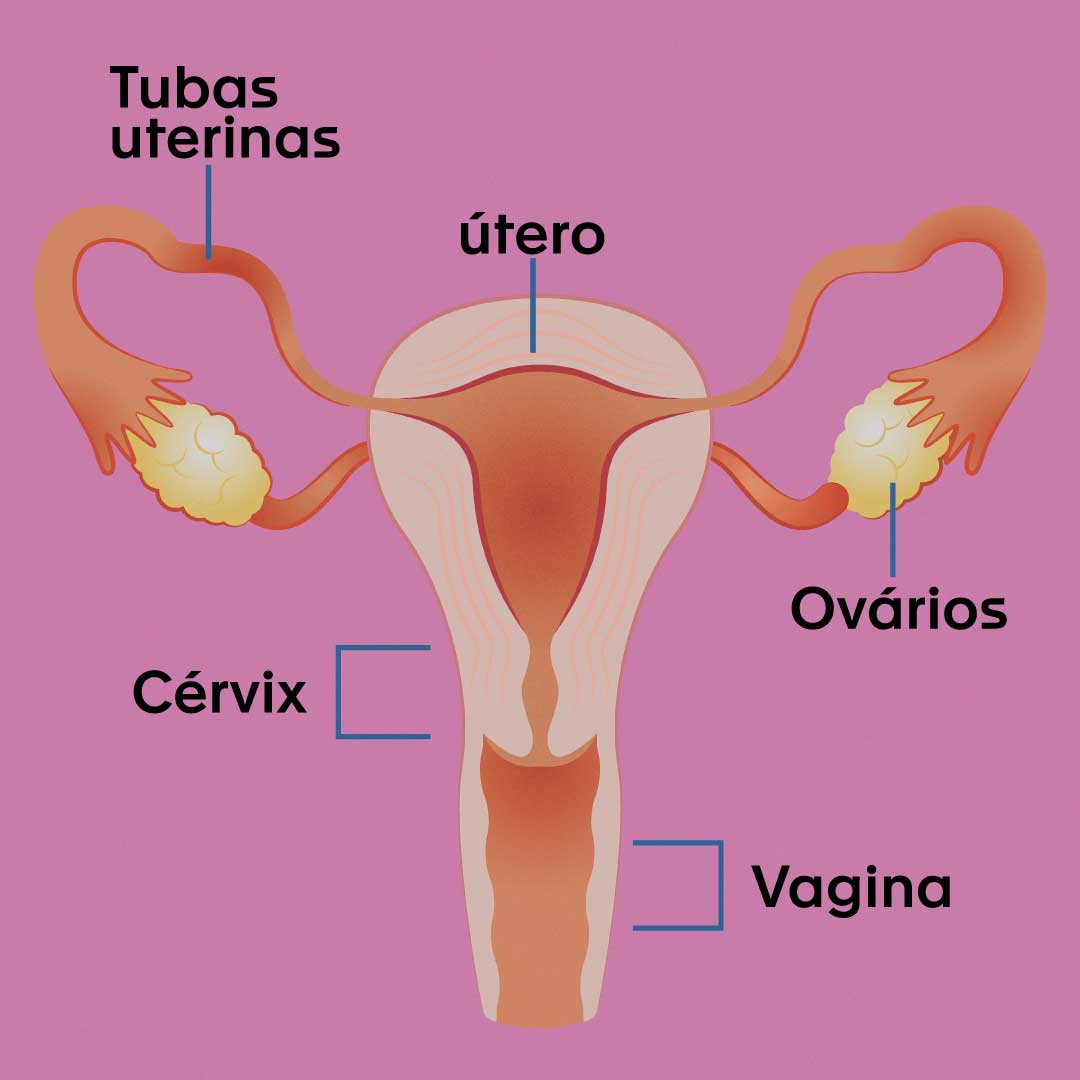
Structure of the uterus. Creative comons image.
There aretwo important tests for early detection:
- Cytology: evaluates changes in cervical cells.
- HPV test: detects the genetic material of the virus and determines whether we are carriers of one or several high-risk HPVs.
Learn more at: https://lch.co/la-citologia-cervicouterina-en-base-liquida/
According to the results of these tests, a third test may be necessary: colposcopy, which can confirm or rule out the diagnosis of cervical cancer.
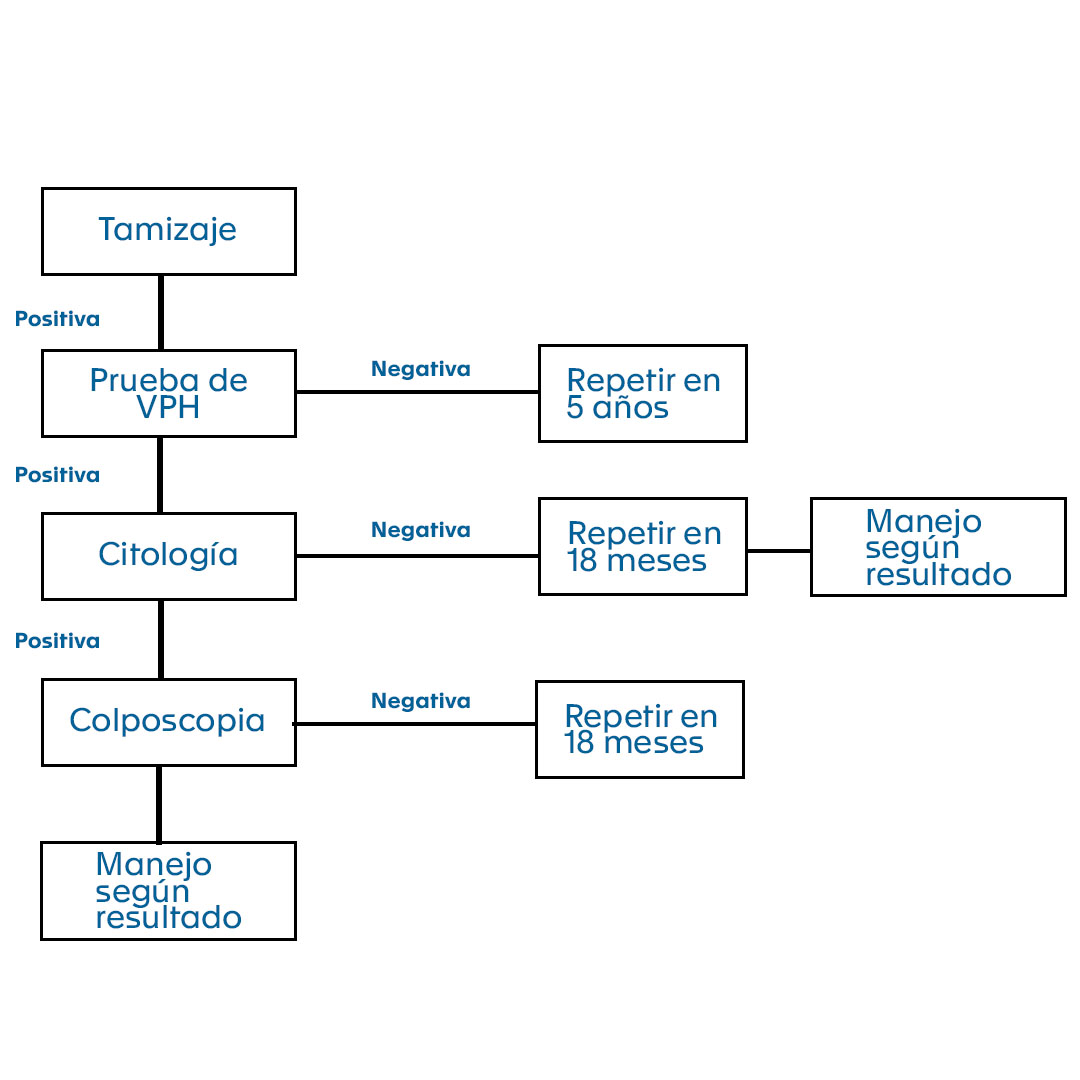
Indication for colposcopy. Taken and modified from the Clinical Practice Guideline for the detection and management of precancerous cervical lesions. Colombia. 2014.
Colposcopy: a detailed and accurate examination.
Colposcopy allows detailed and accurate visualization of the cervix, crucial for detecting premalignant or cancerous lesions. During the examination, the patient is positioned in a gynecological position (similar to an HPV or Pap test), and a metal vaginal speculum is used.
To highlight suspicious areas of lesions, substances such as vinegar and iodine are applied. A colposcope (a low-powered microscope with a magnifying lens), which is placed near the vulva, and a bright light are then used to view the cervix.
If suspicious lesions are identified, the gynecologist takes a small tissue sample (biopsy) for further analysis by a medical pathologist. In addition to HPV-associated cervical lesions, colposcopy can also evaluate the presence of polyps, cervical ectopia and signs of other infections.
It is important to note that although colposcopy and biopsy may be uncomfortable for some women and painful for others, there is the option of performing the procedure under sedation, ensuring patient comfort.
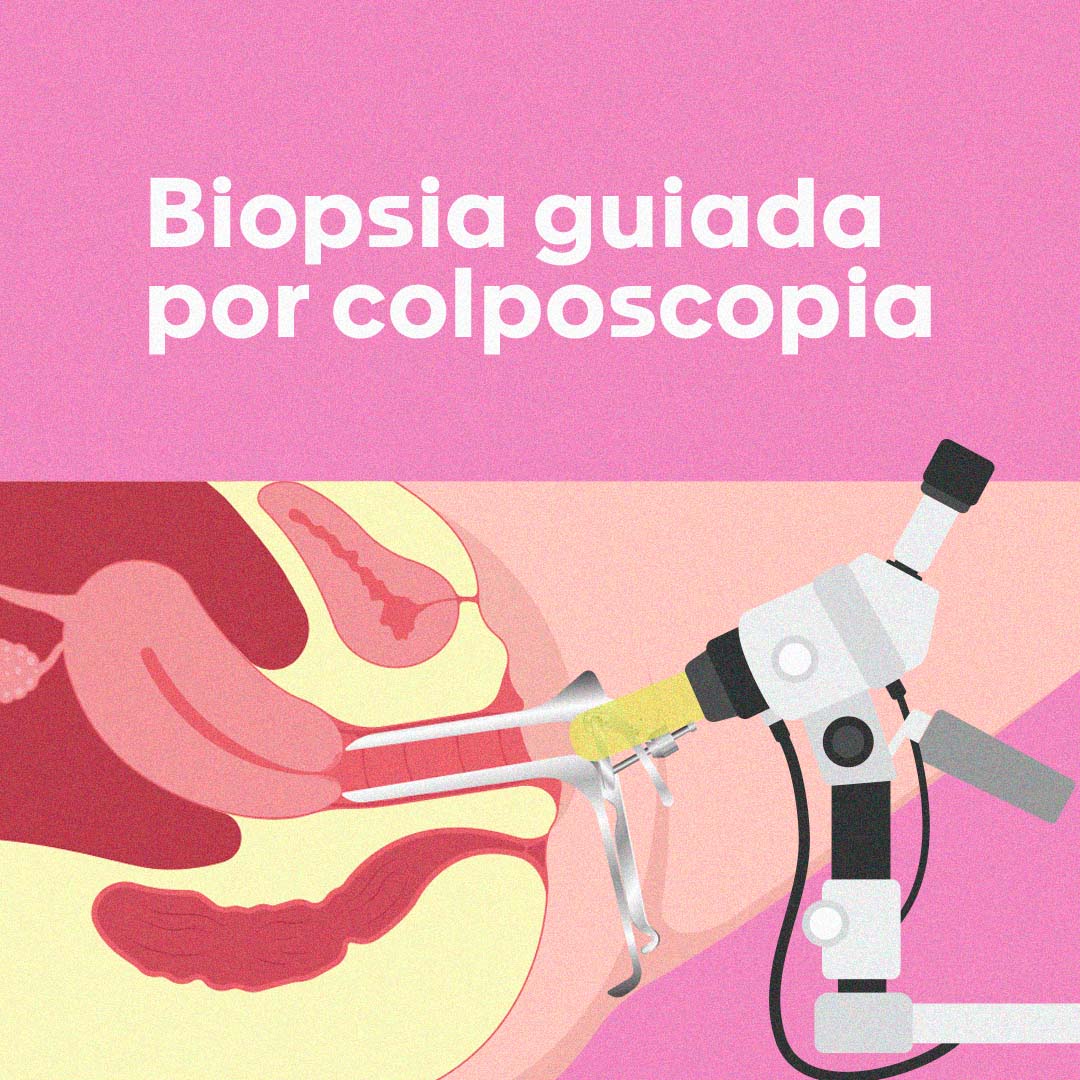
Colposcopy-guided biopsy.
Pathological analysis of samples
All specimens obtained during colposcopy undergo thorough pathological analysis to obtain accurate diagnoses and guide appropriate treatment. Ensuring the quality of this process is essential and requires rigorous protocols for specimen transport, handling and storage.
It is important that the request be accompanied by the medical history and the results of the screening tests performed, as this information is valuable and necessary for the analysis.
In the pathology laboratory, tissue samples are prepared and stained to create histologic slides. These slides are examined under the microscope to identify cellular and architectural changes in the cervical tissue, whether caused by HPV infection or dysplastic or neoplastic changes that may arise due to persistence of HPV infection.
Once this evaluation is completed, the lesions found on the cervix are reported using a standardized scheme and nomenclature (Lower Anogenital Squamous Terminology: LAST). This allows for uniform reporting of findings, facilitating interpretation and subsequent management by the treating physician.
Conclusions
Cervical cancer is preventable and potentially curable when detected early. Reducing the risk factors associated with the persistence of HPV infection and preventing its progression to malignant transformation of cervical cells is critical.
Likewise, regular screening tests and vaccination are fundamental in the prevention of this disease. Taking care of our health and taking proactive measures is essential. In addition, the use of condoms can reduce the risk of HPV infection and other sexually transmitted diseases.
For more detailed information, we invite you to consult the guides and resources provided in the sources cited above.
**
In our Comprehensive Women's Sexual Health Care program, we offer a complete clinical approach for the early detection of precancerous lesions and cervical cancer. It includes:
- Molecular test for HPV (14 high risk serotypes)
- Liquid-based cervical cytology
- Colposcopy and biopsy
- Immunohistochemistry
- Conization by gynecologist, with sedation.
Make an appointment here or come to our offices.
Bibliography
- American Society for Colposcopy and Cervical Pathology (ASCCP). 2013. Updated Recommendations for the Management of Abnormalities Detected During Screening for Cervical Carcinoma and its Precursors. Available at: https://www.asccp.org/Assets/6e13b896-076e-40f7-8200-d1103319c85d/635912165096630000/spanish-algorithms-final-pdf
- National Cancer Institute of Colombia. 2021. Clinical Practice Guideline for the detection and management of patients with preneoplastic lesions of the cervix. Available at: https://www.cancer.gov.co/conozca-sobre-cancer-1/informacion-sobre-cancer-para-profesionales/guias-protocolos-1/guias-practica-clinica-informadas-evidencia/guias-practica-clinica-desarrollo/guia-practica-clinica-para-deteccion
- U.S. National Cancer Institute. 2023. What is cervical cancer? Available: https://www.cancer.gov/espanol/tipos/cuello-uterino
- Mayo Clinic. 2022. Colposcopy. Available at: https://www.mayoclinic.org/es/tests-procedures/colposcopy/about/pac-20385036
5. Ministry of Health and Social Protection. Clinical Practice Guideline for the management of invasive cervical cancer. Guide for patients and caregivers. Colombia 2014. Available at: https://www.cancer.gov.co/recursos_user/masivos/guias_publicadas_917/ccu_avanzado_pacientes.pdf
6. Ministry of Health and Social Protection. Clinical Practice Guideline for the detection and management of precancerous cervical lesions. Complete guide. Colombia. 2014. Available at: https://www.minsalud.gov.co/sites/rid/Lists/BibliotecaDigital/RIDE/DE/CA/gpc-lesiones-precancerosas-cuello-uterino-completa.pdf
7. Sung, H, Ferlay, J, Siegel, RL, Laversanne, M, Soerjomataram, I, Jemal, A, Bray, F. Global cancer statistics 2020: GLOBOCAN estimates of incidence and mortality worldwide for 36 cancers in 185 countries. CA Cancer J Clin. 2021: 71: 209-249. https://doi.org/10.3322/caac.21660