HEMATOLOGY
What do you study and what tests are performed in the area of Hematology?
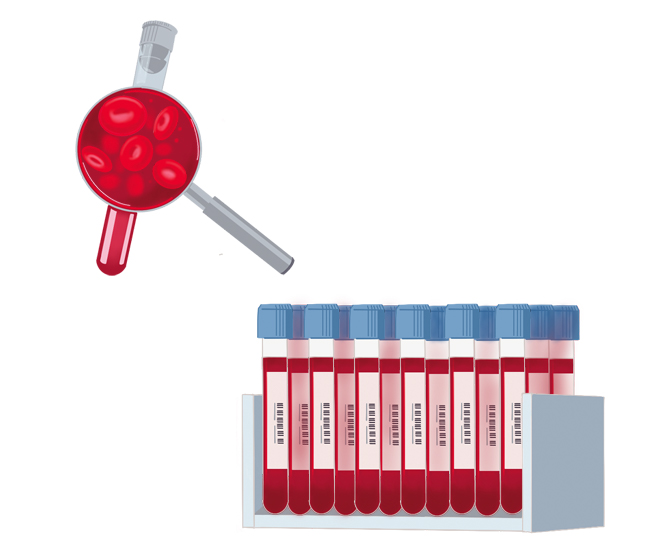
Hematology studies the blood and hematopoietic tissues (lymph nodes, spleen, bone marrow) and the diseases that may affect them.
The main test performed is the hemogram, a blood test that determines the total number of blood cells (erythrocytes, leukocytes and platelets) and the levels of several of their components (e.g. hemoglobin). In the clinical and laboratory study of patients with blood diseases (anemia, leukemias, among others) the hemogram is the most requested test and the cornerstone for its evaluation. This test is also ordered as a routine test for the evaluation of a patient's general health status or to detect or follow up other diseases such as infections and some inflammatory conditions.
The latest generation hemogram (type VI), which is available at the Hematology Department, allows a first approach to the patient's condition and, according to its findings (abnormal increase or decrease in the values of the parameters), it will suggest the performance of complementary tests in the area, such as peripheral blood smear, coagulation tests or flow cytometry, which help in the confirmation of the diagnosis.
This and other areas of the Laboratory offer complementary tests such as hemoglobin electrophoresis, protein electrophoresis, primary hemostasis tests, coagulation factors, sedimentation, specialized tests for the diagnosis of thrombotic disorders, among others.
What do you study and what tests are performed in the area of Hematology?
The hematologist treats blood (hematological) diseases, which may be neoplastic (leukemias and lymphomas) or non-neoplastic (e.g. anemia, coagulation disorders, hemochromatosis, among others), both in the diagnostic and treatment phases and in the follow-up of his patients, always supported by laboratory studies.
What are the recommendations for a patient undergoing this test?
It is important that a patient who needs a hemogram or complementary hematology study be guided by his or her general practitioner or specialist on the reasons for doing it and the interpretation of its results. It is very different when the patient is an adult or a child, when there is suspicion or not of disease, and when it is required as a general screening or follow-up test for a clinical condition. All these data should be available to clinical laboratory professionals as they are necessary for the diagnostic interpretation of the results obtained.