Glycated hemoglobin for the diagnosis and monitoring of diabetes mellitus.
Lina Marcela Restrepo Giraldo.
Endocrinologist. Head of Clinical Liaison, Laboratorio Clínico Hematológico.
Date of publication: 19/01/2023
Glycated hemoglobin, also known as glycohemoglobin, hemoglobin A1C, HbA1c or A1C, is a special component of blood that is formed from the bonding between hemoglobin A and hemoglobin B. hemoglobin A (HbA), the protein found in red blood cells to transport oxygen to all tissues and cells, and some sugars, especially glucose. glucosewhich enter the bloodstream after being ingested in food (Figure 1). 1,2
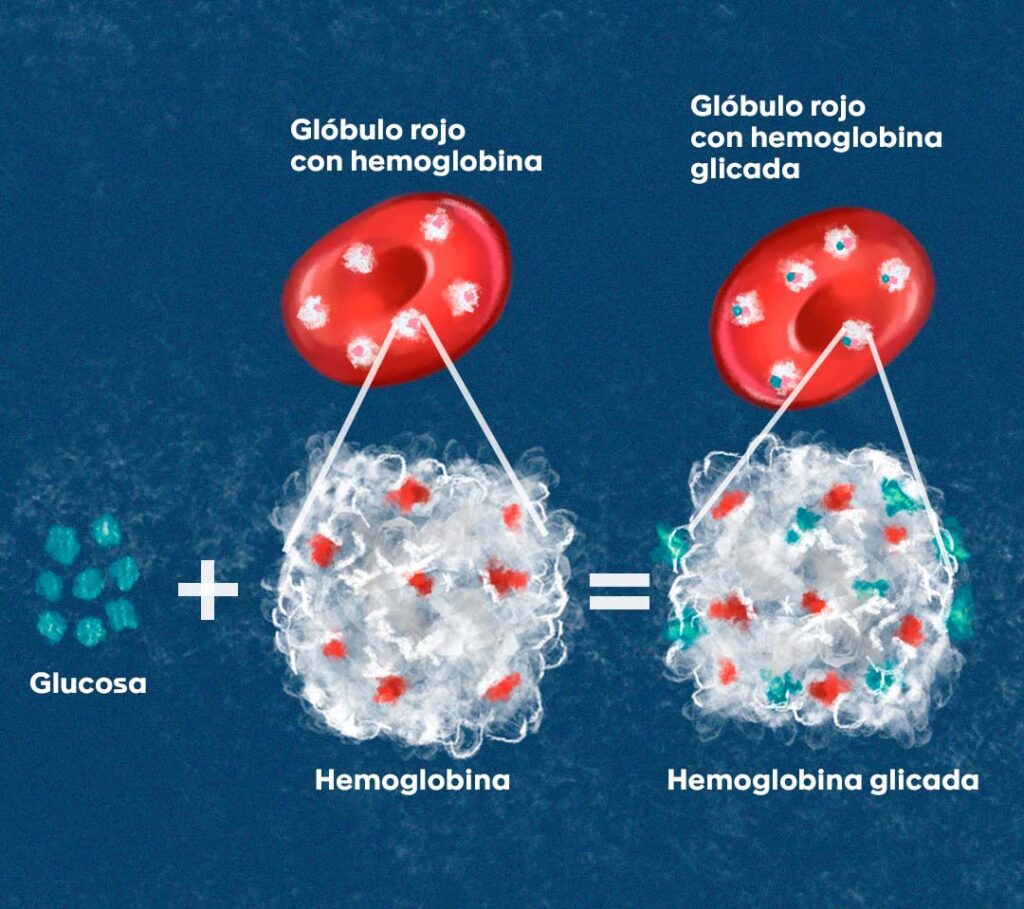
Glucose binds to the hemoglobin found in red blood cells, which carries four oxygen molecules that are bound to the iron in its interior. This results in the formation of glycated hemoglobin, i.e., a hemoglobin with glucose molecules permanently attached to its surface.
Glycated hemoglobin in diabetes mellitus
Thanks to two large clinical studies in the 1990s, the Diabetes Control and Complications Trials (DCCT), in patients with type 1 DM 1010 and the United Kingdom Prospective Diabetes Study (UKPDS) in patients with type 2 DM 1111 HbA1c was established as an indicator of the degree of blood glucose control and the risk of having chronic complications of the disease. Then, in 2010, it was confirmed as a primary criterion for diagnosing DM (using a method certified by the NGSP and standardized with the DCCT reference assay). 12-13.
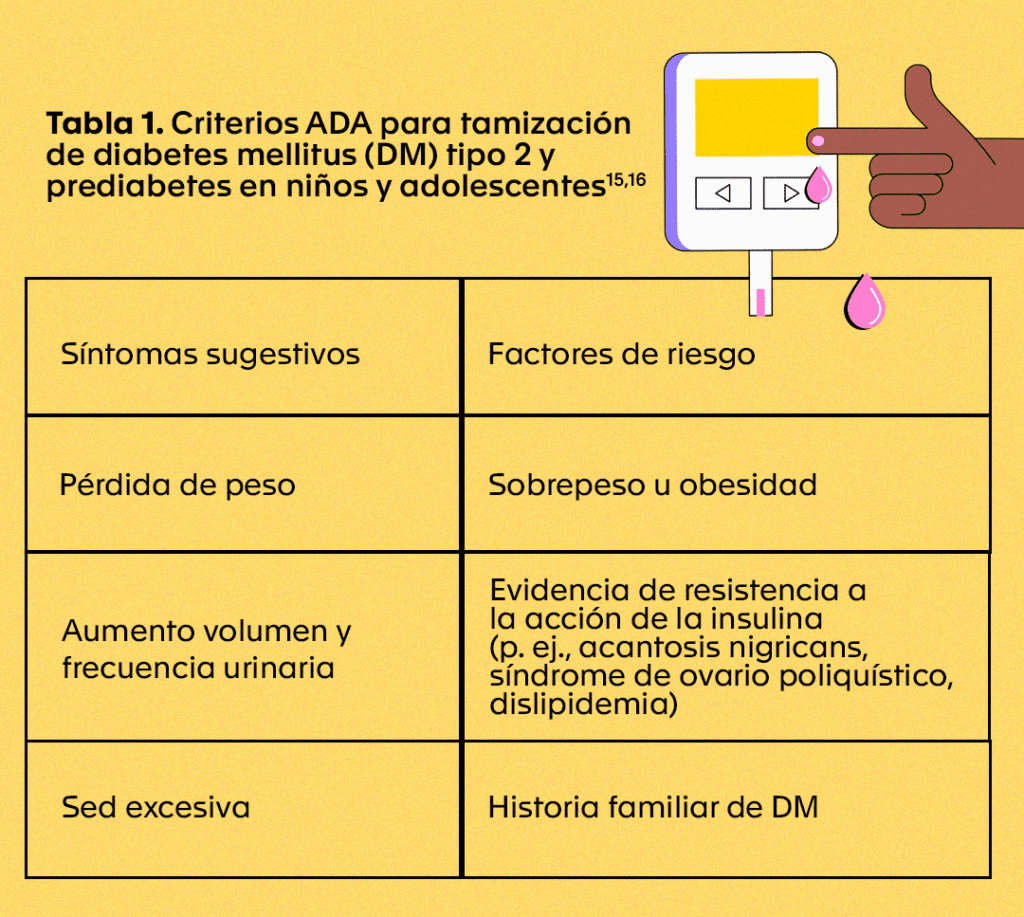
According to the American Diabetes Association (ADA) and the American College of Endocrinology (ACE), it is recommended that HbA1c levels be measured every six months in patients with stable glycemic control and at least every three months in those with variations in their glucose levels or who have changed their treatment. 14. In patients with prediabetes, it is suggested that the test be performed annually. 3. Routine screening for prediabetes and type 2 DM in children and adolescents is only recommended when they present suggestive symptoms and one or more risk factors (Table 1). 15-16. For type 1 DM there are still no recommendations for screening in the general population using HbA1c.
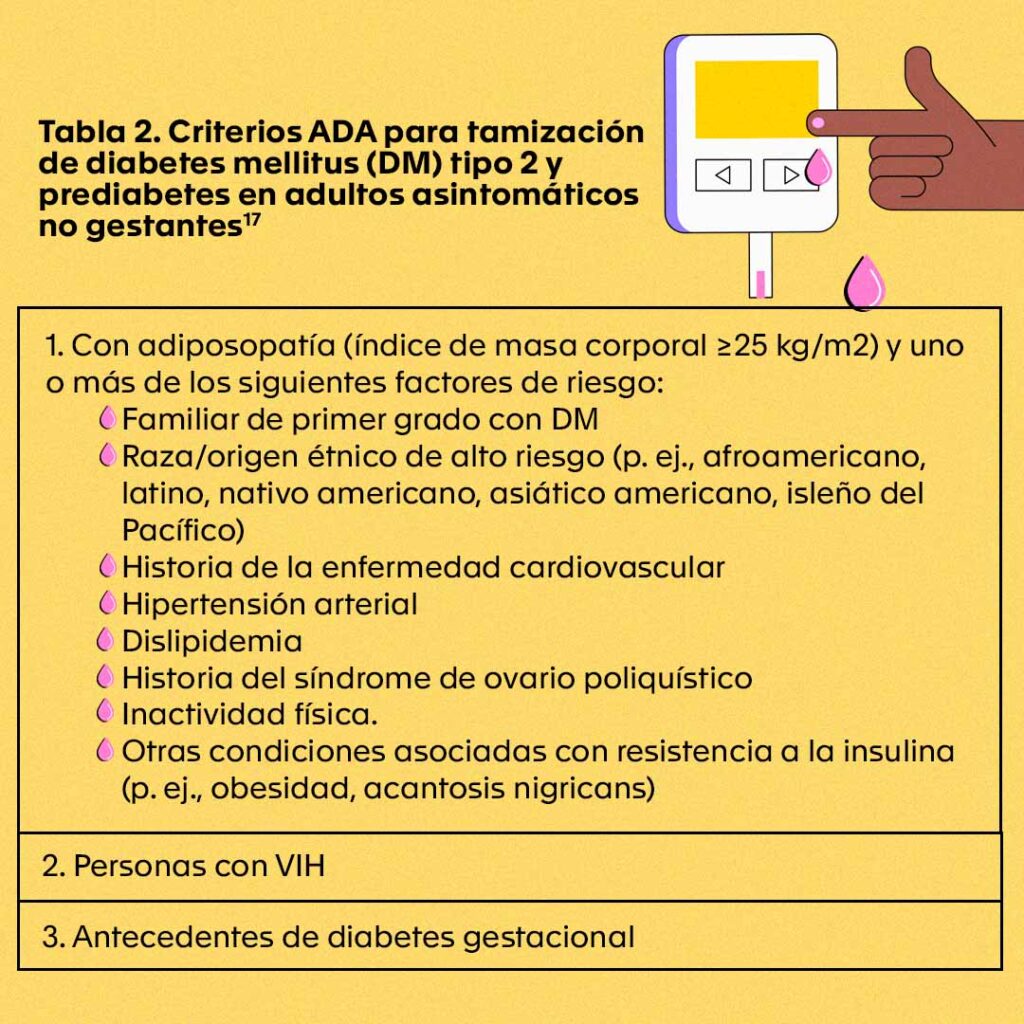
Finally, in pregnant women, it is recommended that HbA1c be evaluated to detect undiagnosed DM as part of routine laboratory studies at the initial prenatal visit. 17. No threshold for HbA1C has been defined for the second and third trimester, as it has not demonstrated good sensitivity and specificity for the detection of gestational DM. 18. In this case, universal screening is performed with the oral glucose tolerance test between 24 and 28 weeks of gestation 17.
Evaluation and interpretation of results
For the study of HbA1c, a whole blood sample taken in a tube with EDTA anticoagulant (lilac cap) is required, which, as an additional advantage, allows it to be taken at any time of the day, without the need for fasting, and has a high stability (up to 1 week at 4 °C) until its evaluation in the laboratory. However, conditions where the half-life of red blood cells decreases, such as anemias, chronic kidney disease, pregnancy, blood transfusions or blood loss, etc., can lead to altered HbA1c values, so the treating physician should be aware of them when ordering and interpreting the test 3,19.
The interpretation of HbA1c results is based on pre-established values in international consensus. For example, the ADA and the ACE indicate that to significantly reduce DM-related complications, the goal is for adults (non-pregnant) to achieve and maintain individual HbA1c values of around 6.5% and 7.0% in the absence of low serum glucose levels (hypoglycemia). 5,7,10,14. Likewise, they established for the diagnosis of DM values above or equal to 6.5 %, and as a risk of developing it (prediabetes) values below 6.5 %, but above or equal to 5.7 %, and for the risk of developing it (prediabetes) values below 6.5 %, but above or equal to 5.7 %. 3,14.
On the other hand, if there are discordant results between HbA1c and clinical suspicion (in the presence or absence of symptoms suggestive of hyperglycemia), the use of complementary blood glucose measurement tests (fasting blood glucose or oral glucose tolerance test) is recommended. If the two tests are concordant, the DM diagnosis is confirmed. If the two tests are discordant, the test that is above the cut-off point for diabetes should be repeated and the diagnosis is made based on the confirmed test. 3,20.
However, as with other laboratory results, it is important for the treating physician to consider each patient's profile, including DM history, risk factors, type of treatment and dosage (if applicable), among others, to establish the best course of action. 21. In addition, he/she should know the method of analysis used for HbA1c measurement and verify that the samples have been processed, preferably, in an NGSP-certified laboratory to ensure that the results are standardized and to avoid misdiagnosis. 3,21.
Certified quality methods
Among the methods for measuring HbA1c there are four that are most commonly used in laboratories 22 and are accepted by the NGSP 23(1) ion-exchange high-performance liquid chromatography (HPLC), which separates HbA1c from other hemoglobin variants based on their electrical charge, and (2) immunoassay, (3) enzyme assay, and (4) boronate affinity HPLC, which are based on structural differences between HbA1c and non-glycated forms of hemoglobin.
The optimal use of these tests and the reliability of the results they provide for the diagnosis and follow-up of DM depends on strict quality controls and standardized measurement according to the DCCT and UKPDS studies, as well as continuous monitoring of analytical performance through comparative studies with international reference laboratories such as those in the NGSP network. 3,14,21,24.
At Laboratorio Clínico Hematológico we have the HPLC methodology (Tosoh G8 analyzer), which measures HbA1c in an automated way, provides accurate and reliable information, and is internationally certified. In addition, we participate in the HbA1c performance evaluation programs every quarter and in the interlaboratory comparison tests annually with the NGSP, which allows us to be certified as a Level I Laboratory. 23.
To learn more about the NGSP network and the certification granted to Hematologic click here.
Bibliography
- Eyth E, Naik R. Hemoglobin A1C. In: StatPearls [Internet]. Treasure Island (FL): StatPearls Publishing; 2022. Available from: https://www.ncbi.nlm.nih.gov/books/NBK549816/
- Sherwani SI, Khan HA, Ekhzaimy A, Masood A, Sakharkar MK. Significance of HbA1c Test in Diagnosis and Prognosis of Diabetic Patients. Biomark Insights. 2016;11:95-104.
- American Diabetes Association. 2. Classification and Diagnosis of Diabetes: Standards of Medical Care in Diabetes-2021. Diabetes Care. January 1, 2021;44(Supplement_1):S15-33.
- International Diabetes Federation. IDF Diabetes Atlas [Internet]. 10th ed. Brussels, Belgium: International Diabetes Federation; 2021. Available from: https://www.diabetesatlas.org
- Stratton IM. Association of glycaemia with macrovascular and microvascular complications of type 2 diabetes (UKPDS 35): prospective observational study. BMJ. Aug 12, 2000;321(7258):405-12.
- American Diabetes Association. Microvascular Complications and Foot Care: Standards of Medical Care in Diabetes-2021. Diabetes Care. January 1, 2021;44(Supplement_1):S151-67.
- Donaghue KC, Chiarelli F, Trotta D, Allgrove J, Dahl-Jorgensen K. Microvascular and macrovascular complications associated with diabetes in children and adolescents. Pediatr Diabetes. September 2009;10:195-203.
- The relationship of glycemic exposure (HbA1c) to the risk of development and progression of retinopathy in the diabetes control and complications trial. Diabetes. August 1995;44(8):968-83.
- Introduction: Standards of Medical Care in Diabetes-2021. Diabetes Care. January 1, 2021;44(Supplement_1):S1-2.
- The Effect of Intensive Treatment of Diabetes on the Development and Progression of Long-Term Complications in Insulin-Dependent Diabetes Mellitus. N Engl J Med. Sep 30, 1993;329(14):977-86.
- Intensive blood-glucose control with sulphonylureas or insulin compared with conventional treatment and risk of complications in patients with type 2 diabetes (UKPDS 33). UK Prospective Diabetes Study (UKPDS) Group. Lancet Lond Engl. Sept. 12, 1998;352(9131):837-53.
- The International Expert Committee. International Expert Committee Report on the Role of the A1C Assay in the Diagnosis of Diabetes. Diabetes Care. July 1, 2009;32(7):1327-34.
- American Diabetes Association. Glycemic Targets: Standards of Medical Care in Diabetes-2021. Diabetes Care. January 1, 2021;44(Supplement_1):S73-84.
- American Diabetes Association. Children and Adolescents: Standards of Medical Care in Diabetes-2021. Diabetes Care. Jan 1, 2021;44(Supplement_1):S180-99.
- Arslanian S, Bacha F, Grey M, Marcus MD, White NH, Zeitler P. Evaluation and Management of Youth-Onset Type 2 Diabetes: A Position Statement by the American Diabetes Association. Diabetes Care. Dec 1, 2018;41(12):2648-68.
- ElSayed NA, Aleppo G, Aroda VR, Bannuru RR, Brown FM, Bruemmer D, et al. Introduction and Methodology: Standards of Care in Diabetes-2023.. Diabetes Care. January 1, 2023;46(Supplement_1):S1-4.
- Donovan L, Hartling L, Muise M, Guthrie A, Vandermeer B, Dryden DM. Screening Tests for Gestational Diabetes: A Systematic Review for the U.S. Preventive Services Task Force. Ann Intern Med. July 16, 2013;159(2):115.
- Lo C, Lui M, Ranasinha S, Teede HJ, Kerr PG, Polkinghorne KR, et al. Defining the relationship between average glucose and HbA1c in patients with type 2 diabetes and chronic kidney disease. Diabetes Res Clin Pract. Apr 2014;104(1):84-91.
- Selvin E, Wang D, Matsushita K, Grams ME, Coresh J. Prognostic Implications of Single-Sample Confirmatory Testing for Undiagnosed Diabetes: A Prospective Cohort Study. Ann Intern Med. Aug 7, 2018;169(3):156-64.
- National Institute of Diabetes and Digestive and Kidney Diseases (NIDDK). Diabetes & Prediabetes Tests [Internet]. 2020. Available at: https://www.niddk.nih.gov/health-information/professionals/clinical-tools-patient-management/diabetes/diabetes-prediabetes
- Weykamp C, John WG, Mosca A. A Review of the Challenge in Measuring Hemoglobin A1c. J Diabetes Sci Technol. May 2009;3(3):439-45.
- NGSP. Certified Methods and Laboratories [Internet]. Harmonizing Hemoglobin A1c Testing. 2022. Available at: http://www.ngsp.org/certified.asp
- NGSP. Obtaining Certification [Internet]. Harmonizing Hemoglobin A1c Testing. 2010. Available at: http://www.ngsp.org/critsumm.asp